
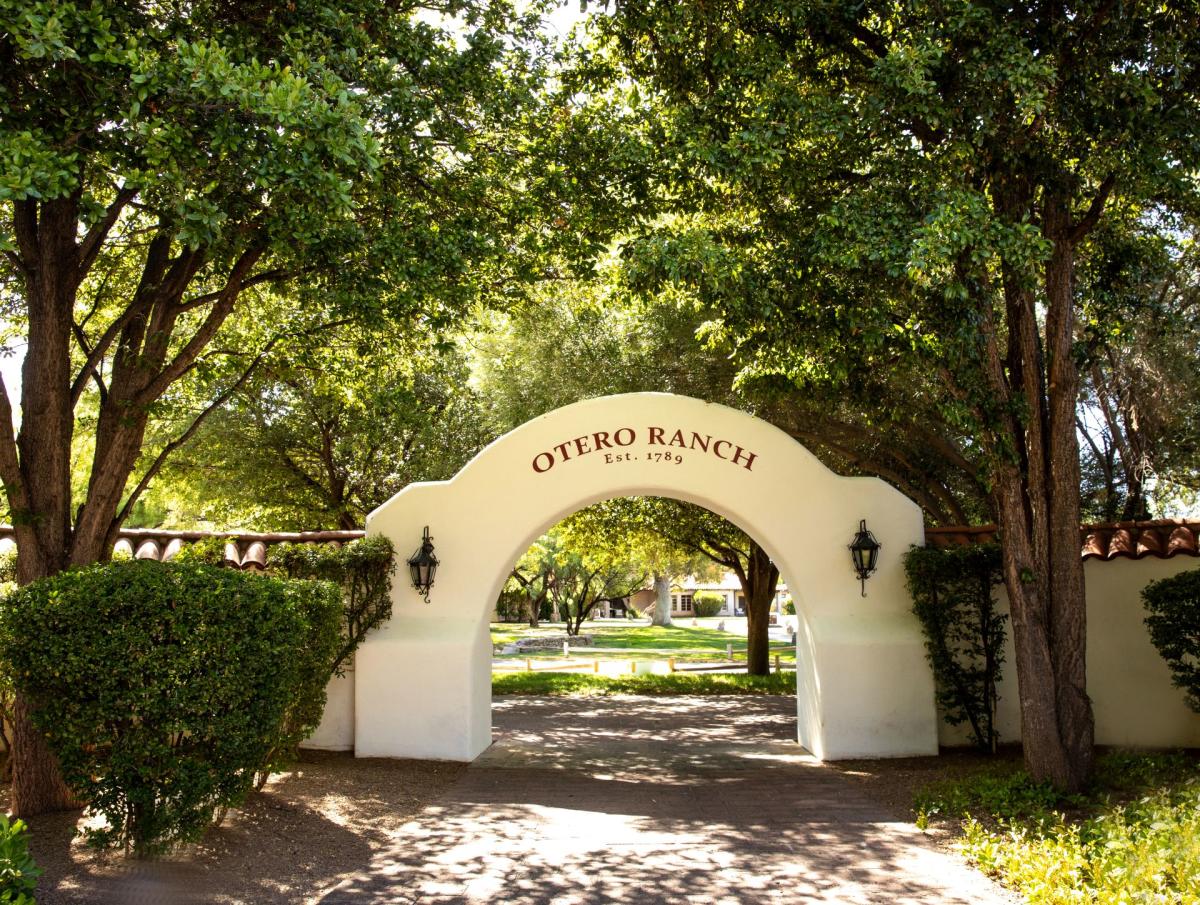
This is the second to last stop in our Haunted Hotels series, where we’ve been exploring the places in America where history lingers a little too close, and the veil between past and present feels thin. Today, we head to southern Arizona and the storied Otero Ranch House, a site that has been home to centuries of history and, by all accounts, centuries of ghosts.
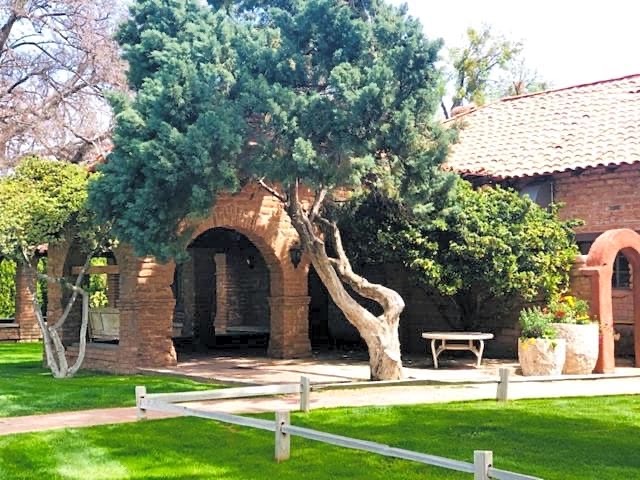
Some places do not let their history rest. The Otero Ranch House, now part of the Tubac Golf Resort and Spa in Tubac, Arizona, is one of those places. Its adobe walls have stood for more than four centuries, absorbing stories of survival, violence, fire, and reinvention. Visitors say those stories still play out today, not only in the history books but in whispers down hallways, figures glimpsed in mirrors, and furniture that seems to move with a will of its own.
In 2024, the resort was named one of the Top 25 Historic Hotels of America® Most Haunted Hotels. Rather than shy away from that title, Tubac Golf Resort embraces its haunted reputation, offering tours, publishing tales, and allowing guests to share in the mystery.
A Family Claim That Lasted for Centuries
The Otero story began in 1789, when Don Toribio de Otero received the first deeded land granted to a European settler in Arizona. For generations, the Otero family held the ranch, raising families and defending their land against raids and upheaval.

Third Seal, Two Reales, for the years 1798 and 1799
Don Nicolás de la Inza, Lieutenant Commander of the Company of Pimas at Tubac.
Since the settler Toribio de Otero has appeared before me, requesting a house lot and farmlands in order to settle in this presidio and to work for the sustenance of his household this being of clear benefit to the community and the frontier and because the petitioner and his family are farmers who raise grain, which is much needed in this region, and often must be sought from distant places, therefore:
By virtue of the authority that His Majesty grants me, I hereby grant to Toribio de Otero the requested house lot and farmlands, and I place him in first possession, perpetual and forever, by hereditary right, for himself, his children, and his descendants.
The house lot is granted so that he may build his dwelling on the lower side of this Presidio, to the south, facing north, near the Sierra, at about a quarter of a league’s distance from the presidio, down by the river, making use of whatever water may be found there.
And by the authority of His Majesty (may God keep him), I further grant him four suertes of farmland, which are to be measured from south to north and east to west, four hundred varas each side, making a total circumference of three thousand four hundred varas.
It is understood that the said Toribio de Otero must always keep himself armed and mounted, ready to defend the land against the enemies who harass it, and to march against them whenever he is called.
He shall not, for the space of four years counting from this date, sell, alienate, mortgage, or otherwise encumber the said house lot and farmlands, not even for pious purposes. Within the strict term of two years he must have his house built and his family established in this Presidio, and within the term of four years he must complete his ownership and possession of the lands, house lot, and buildings…
Tubac’s Tumultuous History
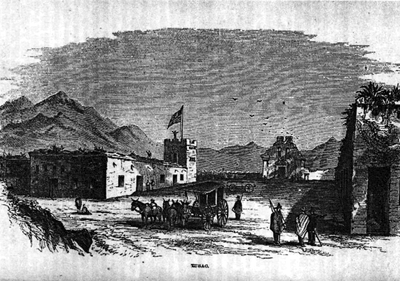
The Otero land grant marked only the beginning. What followed was life on a dangerous frontier, where presidios stood as fragile outposts against raids, wars, and shifting powers. Tubac was a military outpost long before it was a golf resort. Spanish soldiers were stationed in the valley as early as 1752. In August 1861, more than 200 Chiricahua Apache warriors laid siege to Tubac for three days while Mexican bandits lingered nearby. Reinforcements from Tucson briefly broke the assault, but with supplies running out, the townspeople fled under cover of night, leaving the community to be burned and plundered.
The Otero family endured much of this history. In 1867, Manuel Otero was captured during an Apache raid and tied to a tree for two days, a trauma that scarred the family for decades. Eventually, in 1937, the Oteros sold the property.
From Ancestral Ranch to Hollywood Playground
After Teófilo Otero sold the family homestead in 1937, the property exchanged hands among individuals including aviator Joanna Shankle Davis and banker Wirt Bowman. During these years, Tubac quietly blossomed into an artist colony, with galleries and art schools emerging in the village. Then in 1959, Bing Crosby and a circle of investors purchased the land, honoring its heritage by restoring the old hacienda and opening the Otero Course under the vision of golf architect Robert “Red” Lawrence.


Ghostly Residents of the Ranch
The Otero Ranch House has long been known for producing vivid apparitions and unsettling encounters. Visitors and staff most often describe four recurring spirits: a little boy, a woman in gray, a gentleman, and a cowboy. Yet the reports extend well beyond these familiar figures.
The little boy is often seen playing near the front door of the hacienda, a presence recognized by both tourists and Otero descendants. In the living room, a woman dressed in period clothing has appeared, quietly dusting furniture as though her household chores were never finished. Cowboys are frequently spotted in the Stables Restaurant. One guest recalled a man in full western attire seated in a booth, calling for a waitress before vanishing as she approached. Another described a cowboy at the bar who disappeared mid-sip.
Other sightings are more unsettling. Guests staying in Room 002 reported a visit from a silver-haired man who silently entered the bathroom and did not return. Employees tell of a doorman spirit who seems to interact with guests in the reception area, holding open the door and greeting arrivals. Even the grounds outside the house are not free of activity. One manager described seeing three figures walking hand in hand down a road before they vanished all at once.



Voices, Whispers, and Scents
Not all encounters at Otero Ranch take a visible form. Many visitors and employees report hearing voices when no one is present. Two workers once described the drawl of a western man speaking in the bathroom near the Stables Restaurant, loud enough that both fled immediately. Cleaning staff say they often hear conversations in the empty Otero Hacienda, as though a group of unseen people were gathered just out of sight. Descendants of the Otero family themselves have reported hearing the voice of a boy speaking in Spanish, close enough to sound real but never visible. Guests in Room 108 have even claimed to be woken by whispers directly in their ear while wooden shutters rattled on the windows.
The hauntings extend beyond voices. Visitors frequently describe scents drifting through the rooms without explanation. Lavender sometimes lingers in the air before vanishing. Tobacco smoke has appeared in spaces where no one has lit a cigarette, and one guest recalled waking to the distinct sensation of smoke being blown directly into her face. Others mention a musty, smoky odor in the living room that disappears as quickly as it comes. These fleeting impressions of sound and scent deepen the impression that the ranch is alive with echoes of those who once walked its halls.
When the House Refuses to Stay Still
For some, the activity at Otero Ranch is far from subtle. Objects move on their own, furniture shifts, and doors act with a will that seems almost deliberate. In the Cantina kitchen, cooking utensils have been seen sliding across counters when no one was near them. Curtains lift and fall in front of witnesses, as if tugged by invisible hands.
Reports also describe heavier disturbances. Couches have shifted with people seated on them, and one IT worker claimed he was shoved across the room before curtains collapsed over him. He fled the ranch and refuses to spend another night inside. On more than one occasion, the front door locked itself from within after furniture was removed, forcing staff to crawl through windows to reopen it. A queen-sized bed once dragged itself from the wall while guests stood nearby. Even after being pushed back into place, it moved again only minutes later.
The building itself also seems restless. Lights in the meeting room turn on without explanation, and a crank window has been discovered open repeatedly, no matter how often it was secured. These strange movements, whether small or dramatic, suggest that the Otero Ranch remains unwilling to stay still.
Layers of Suffering Behind the Hauntings
The Otero Ranch has stood through generations of change, its adobe walls holding the memory of both daily life and periods of difficulty. The Otero family experienced the turbulence of the borderlands, including raids and regional conflicts that shaped the community around them. Those years of uncertainty and hardship became part of the ranch’s long story. Experiences like these often leave an impression on a place, and many believe they contribute to the sense of unease that still lingers at the property today.
In the 20th century, the Otero Ranch became home to Joanna Fay Davis, later known as Joanna Fay Davis West. She was a wealthy heiress whose life became entangled in a series of highly publicized sanity hearings. At times she was declared competent and praised for her intelligence, but eventually she was confined to a hospital and declared legally incompetent, with guardians appointed over both her person and her fortune.
Her story reflects the turmoil of a woman whose sharp mind, erratic spending, and personal struggles were scrutinized in courtrooms until her autonomy was taken from her. That kind of decline, from wealth and independence to confinement and loss, carries a sorrow that lingers. Sadness, paranoia, and mental illness often leave behind an atmosphere that clings to a place. At Otero Ranch, many believe that Joanna’s suffering left a psychic imprint, her presence still tied to the adobe walls and the land that may have once been her solace.
A Haunted Resort Today
Today, the Tubac Golf Resort and Spa highlights its amenities more than its ghosts. The history of the Otero Ranch House is still part of the property, but the stories of voices, shadows, and vanishing figures now live mostly in books and the memories of those who have experienced them.
Guests may still arrive for golf, dining, or a quiet desert escape, but the house has its own way of reminding visitors that the past is never entirely gone. Some leave with stories of footsteps in empty rooms, curtains that stir without wind, or voices that seem to speak from nowhere. At the Otero Ranch House, history settles deeply into the walls, and from time to time it makes itself known.
💀 Have you visited the Otero Ranch House? Share your stories with The Dead History. Some ghosts wait to be discovered, while others are waiting for you.