
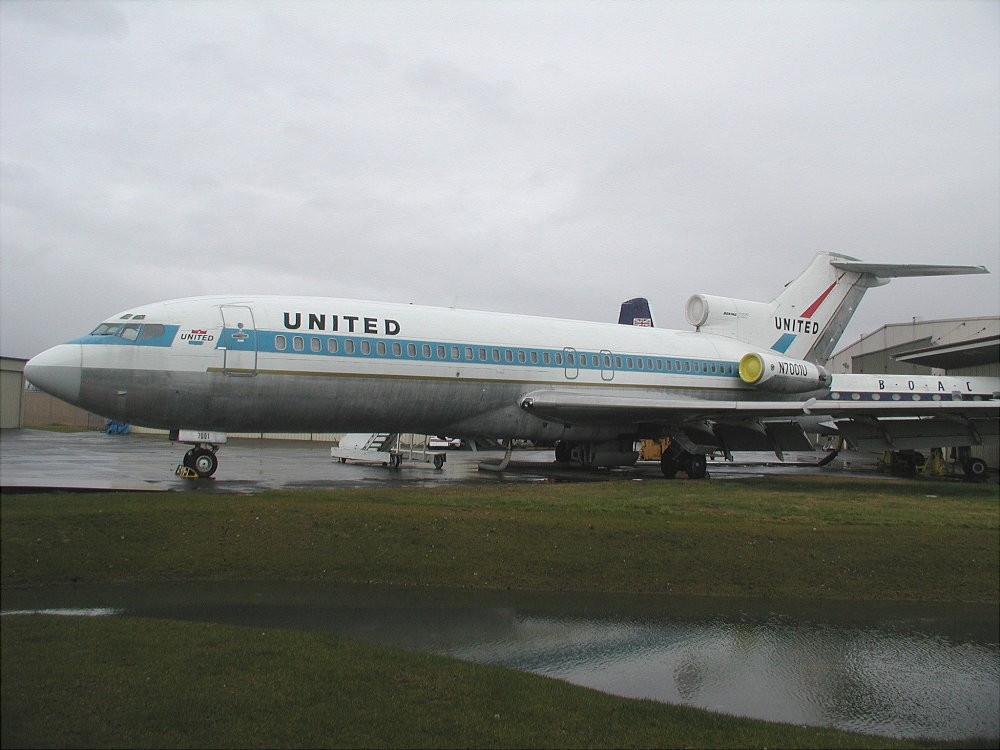
One evening I was sifting through Utah death records when I found a startling entry on November 11, 1965. Instead of the usual 15-20 names on a specific date, there were 52, all tied to a single catastrophic event: the United Airlines Flight 227 crash at Salt Lake City International Airport.
Flight 227: A Routine Trip Turns to Disaster
United Airlines Flight 227, a Boeing 727, left New York’s LaGuardia Airport that morning, making stops along the way to its final destination in San Francisco. By the time it reached Denver, nothing was out of the ordinary. The flight crew changed, the passengers stretched their legs, and the plane continued west.
At 5:47 p.m., Salt Lake City air traffic control cleared the plane for landing.
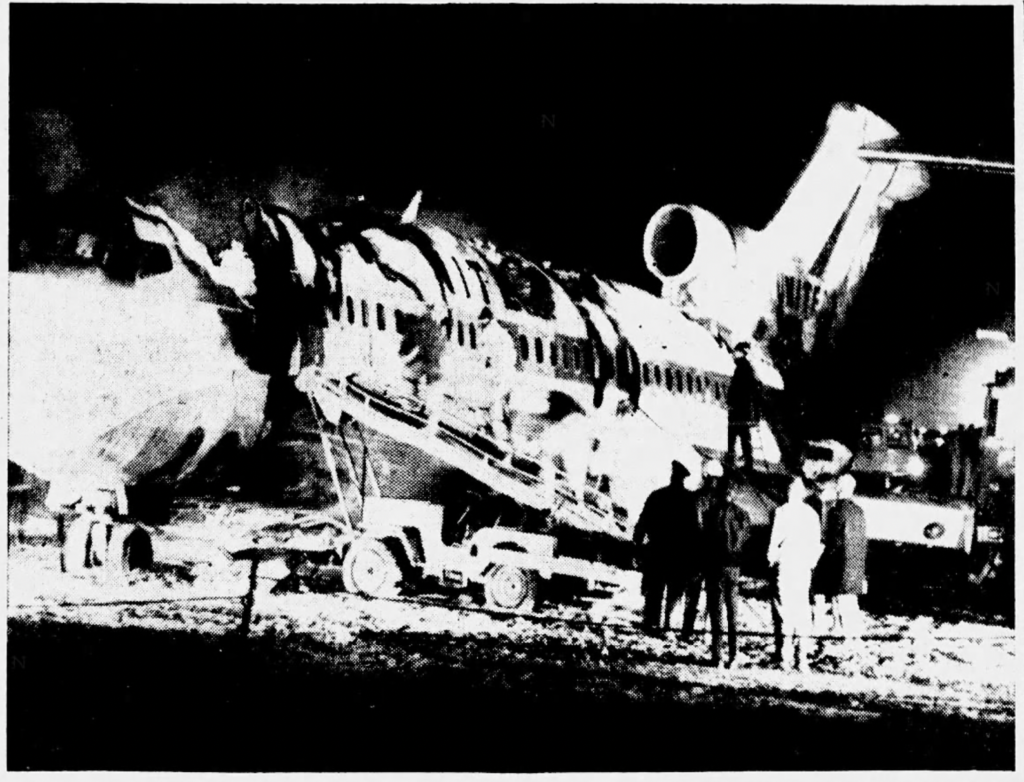
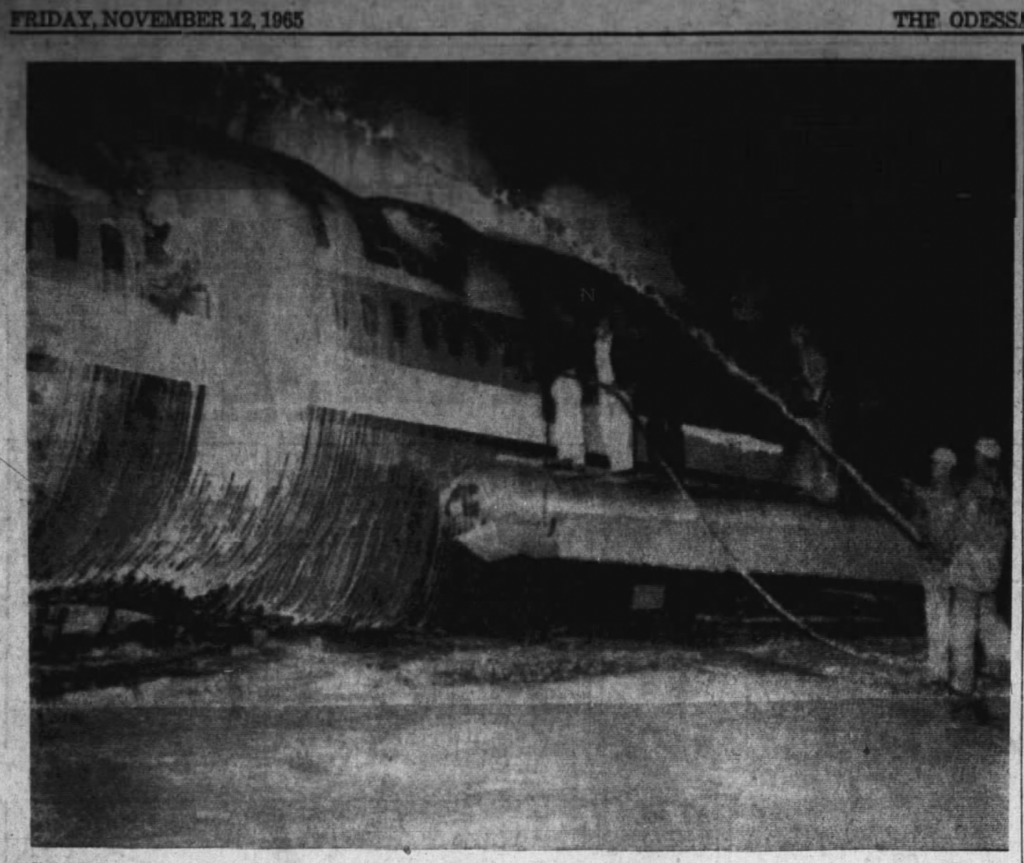
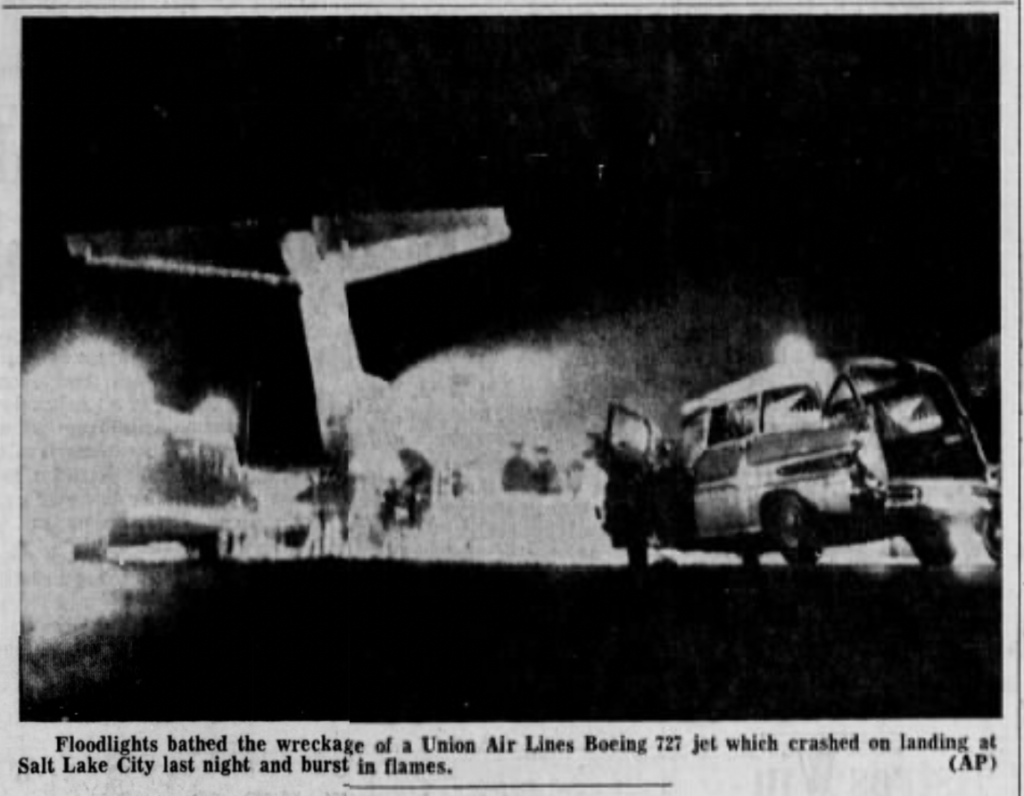
At 5:52 p.m., Flight 227 slammed into the ground 335 feet short of the runway, broke apart, and erupted into a fireball.
The initial impact was survivable. The fire wasn’t.
The Crash: A Chain of Bad Decisions
As Flight 227 approached Salt Lake City International Airport, air traffic control asked the crew to confirm their speed and altitude. The reply?
“250 knots at 10,000 feet.”
The plane was descending at over 2,300 feet per minute, three times the recommended descent rate. The captain didn’t correct it. The First Officer, Philip Spicer, tried to apply power to slow the descent. Captain Kehmeier stopped him and told him to wait. Thirty seconds later, the captain finally tried to add power. It was too late.
At 5:52 p.m., Flight 227 hit the ground full speed, bounced once, and skidded for nearly 3,000 feet before coming to a violent stop. The landing gear and an engine ripped free, severing a fuel line inside the fuselage. Sparks from the impact ignited the fuel, and the aircraft erupted into an inferno.
The cabin filled with thick smoke. Passengers scrambled for the exits.


Survival and Tragedy: The Human Cost
Out of 91 people onboard, 43 died. Not because of the crash itself.
The Civil Aeronautics Board’s official report found:
“There were no traumatic injuries that would have precluded escape.”
Most of the victims would have survived. The fire and smoke killed them. When emergency responders arrived, they found bodies piled in the aisles, overtaken by flames before they could reach an exit. Among the victims was Bill Linderman, a champion rodeo cowboy, who had left behind a final message hours before the crash. He cashed a check at Denver’s Pig ‘n Whistle restaurant and, in the space for his address, wrote one word: “Heaven.” The remains were removed in 40 separate body bags.
Survivor Testimonies:
Marvin Bennett, a missionary returning home from Colombia, tried to unbuckle his 6-year-old daughter, Rosa. Before he could free her, a fireball from a ruptured oxygen line engulfed them. Another passenger, Nad Brown, pulled Bennett out of the flames. Rosa, his wife Janet, and their daughter Maria did not make it out.
Shigelakia Shimura, a Japanese scientist, survived because he was already unbuckled at impact and escaped before the flames consumed the cabin.
A young Air Force member survived. The two friends sitting next to him didn’t. Entire families were wiped out. The Blaisdell family was traveling together that night.
What Went Wrong? The Captain’s Troubling History
The official cause of the crash was pilot error, specifically Captain Kehmeier’s failure to arrest the plane’s descent in time. What investigators found about his past is worse. Captain Kehmeier should never have been flying that night.
His training record was a catalog of failures and second chances that should never have been granted:
1960: He failed his DC-8 transition training due to poor judgment and inability to follow standard procedures.
1961: After being removed from jets, he was reassigned to the DC-6, where he was rated “average to above average.”
1962: He was given another chance in the Boeing 720, but his type rating was delayed because he needed extra training.
1964: He failed an instrument proficiency check and only passed on a second attempt, two days later.
1965: His final Boeing 727 flight check was described as “below average.” The FAA examiner noted he had to be reminded to maintain altitude and airspeed, basic piloting skills.
And yet he was still allowed to command a jetliner. Had anyone in the chain of command acted on these concerns, Flight 227 never would have crashed.
The Aftermath: How Flight 227 Changed Aviation
The crash forced the FAA to overhaul pilot training and safety standards. Procedures for recognizing and correcting dangerous descent rates were made explicit. Pilots were required to demonstrate they could identify and respond to a high-rate descent before certification. What Captain Kehmeier failed to do on November 11, 1965, became required training for every pilot who came after.
The FAA also raised minimum experience requirements for captains. First officers, who had long been expected to defer to the captain even when something was clearly wrong, were explicitly granted authority to challenge command decisions. Flight 227 helped push a shift in cockpit culture that the industry had resisted for years.
Fire suppression systems were overhauled, and fuel lines were redesigned to be less likely to rupture on impact. The post-crash fire that killed 43 people became the direct cause of changes that have since saved lives in accidents across the industry.
The regulations changed. The questions didn’t. How many documented failures does it take to ground someone? How many second chances before accountability costs lives? For 43 people on Flight 227, those questions came five years too late.
Final Thoughts: A Preventable Tragedy
The FAA had the records. United had the records. Five evaluations told them exactly who Captain Kehmeier was. Nobody acted on any of it. Forty-three people survived the crash. The fire took them anyway.
List of Flight 227 Victims:
| Name | Age | Occupation / Notable Information | Additional Details |
|---|---|---|---|
| Theodore G. Fulmor | 61 | Research Chemist, Anaconda Copper Mining Company | Survived the initial crash but died in a Salt Lake City hospital. |
| Sterling R. Forney | 48 | Retired Lt. Colonel, Equipment Specialist at Hill Air Force Base | Returning from duty at Picatinny Arsenal, NJ. |
| William E. Linderman | 44 | Pro Rodeo Champion | First cowboy to win $500,000; rumored to have returned to help others. |
| Violet Weaver | 45 | Traveling to Pinedale, Wyoming | Meeting her husband for their wedding anniversary. |
| Robert A. Stansell | 38 | Vice President, Ark-Less Switch Corp. | Boarded in Denver, heading to the West Coast for business. |
| Helen Bowdidge | 39 | Reliance Life Insurance Employee | Mother of four, returning home to Bountiful, Utah. |
| Harold Blaisdell | 55 | Engineer, McDonnell Douglas | Traveling with wife Vera and son Norman. |
| Vera Mae Blaisdell | 46 | Spouse of Harold Blaisdell | Traveling with husband Harold and son Norman. |
| Norman Blaisdell | 11 | Child | Traveling with parents Harold and Vera. |
| Curtis Lee | 20 | Airman 3rd Class, U.S. Air Force | Enlisted two months before the crash; former football star. |
| Lois Crock | 49 | Comptometer Operator | Worked for Gates Rubber Co. in Denver. |
| Frank Crock | 58 | Industrial Engineer | Worked for Gates Rubber Co. in Denver. |
| Pete Rallas | 45 | Salesman, Dayco Corporation | Lived in Los Angeles. |
| Fred Hart | 34 | M. Sgt., Flight Engineer, Hill Air Force Base | Survived a midair collision days before this crash. |
| John Feiock | 37 | Real Estate Specialist, U.S. Bureau of Reclamations | Returning to Salt Lake City from Pueblo, Colorado. |
| Herman Caling | 34 | S. Sgt., Loadmaster, Hill Air Force Base | Returning from a temporary duty assignment. |
| Joseph Bracco | 56 | Assistant Purchasing Agent, Montana Power Company | No additional details available. |
| Howard Pack | 61 | Regional Service Manager, White Motor Company | Based in San Francisco. |
| Janet Bennett | 24 | Catholic Missionary, Papal Volunteers | First trip home in three years; traveling with Rosa, Maria, and Marvin (survivor). |
| Rosa Bennett | 5 | Child | Traveling home from Colombia with family. |
| Maria Bennett | 2 | Child | Traveling home from Colombia with family. |
| Sarah Fine | 33 | Office Manager, Business Men’s College | Lamar, Colorado resident. |
| Raymond Gallant | 53 | Field Sales Manager, E.I. du Pont de Nemours Co. | Returning to Salt Lake City from a business trip. |
| Emmitt Siniard, Sr. | 40 | Senior Contract Negotiator, Jet Propulsion Lab (Caltech) | Survived the initial crash but died days later in SLC. |
| Robert Burnis | 37 | TSgt., Flight Engineer, Hill Air Force Base | Returning from a temporary duty assignment. |
| John Weber | 43 | Professor of Economics, University of Idaho | No additional details available. |
| Edna Allred | 45 | Nursing Home Attendant | From Moore, Oklahoma. |
| Carol Combs | 27 | Returning from house hunting in Texas | Preparing for a move. |
| Deva Harris | 42 | Secretary, 945th Troop Carrier Group | Returning from visiting family in Texas. |
| Evelyn Olson | 66 | Mother of Deva Harris | Traveling with her daughter. |
| Betty Wood | 51 | Cheyenne, Wyoming Resident | Boarded in Denver, coming to Salt Lake City to visit family. |
| William Shoemaker | 38 | Regional Sales Manager, Paper Company | Based in California, traveling for business. |
| Edward Gammie | 26 | Attorney from Illinois | Had just welcomed his first child in September 1965. |
| Hamilton Von Breton | 53 | President, Island Timber Co. | Returning to California. |
| Fred Gottschalk | 54 | Chief of Marketing, Potlatch Forests, Inc. | From Lewiston, Idaho. |
| Allen Berry, Sr. | 59 | District Manager, Boise Cascade | Returning from a business trip. |
| Raymoth Harlan | 50 | Secretary, J.L. Cooper Co. | From Spokane, Washington. |
| Jack Cavin | 63 | Painter | En route to Twin Falls, Idaho for his mother’s 86th birthday. |
| Douglas Reid | 31 | Electrical Technician | From Granger, Utah. |
| Alvin Jacobson | 38 | Executive, Motorola | Lived in Van Nuys, California. |
| Robert Manly | 36 | Oil & Gas Lease Broker | Returning to Salt Lake City on his birthday. |
| Vernal Steffensen | 60 | President, First Security Bank of Idaho | Returning from a business meeting in Denver. |
| Ronald Whitaker | 56 | General Sales Manager, Amalgamated Sugar | Boarded in Omaha, headed to Boise for business. |
Sources & References:
1. Civil Aeronautics Board (CAB) Official Report on UAL Flight 227
2. FAA Lessons Learned Database
3. Survivor Testimonies from the Idaho State Journal
4. Aviation Safety Network Database
5. Historical News Clippings (Salt Lake Tribune, Ogden Standard-Examiner)
7 comments
Half of the deceased passengers are not listed. The uncle of one of my school classmates, a Mr Gallant, was killed in this crash.
He is on there now, I was still adding people.
Thank you Ms Jones. First list of passengers to list my Grandmother, Betty Wood. She was not on the originally manifest and boarded last minute in Denver. My dad was there(in the tower) when it crashed, knowing she was supposed to be on it, but she didn’t come up on the list of passengers, living or dead. There was rumor of an unidentified extra body in the crash, not on the manifest(my dad’s friend told him, unofficially) hinting to my dad that she was most likely on that flight and likely that body. He was eventually asked to go down and identify the body before the name was released. All my research, with the flight, were always missing her name.
Oh, how terrible for your poor father. I can’t even imagine. Thank you for sharing your story.
TSgt. Robert Burnis is my grandfather. I appreciate the research you have put into this as well as the photographs and news footage. Thank you for sharing this story.
Thank you
Hi Jennifer. I am writing a book on airplane cabin safety and this accident will be featured prominently in it as it was what they call a ‘gamechanger’. The accident stimulated a host of cabin safety improvements. I would like to use the aerial review photo in the book. I consulted the UPI website. It says that ‘UPI no longer holds the licensing rights and cannot verify the current rightsholder.’ Have you perhaps been able to find the rightsholder, so that I can contact him/her for obtaining permission to publish it in the book? Thank you. By the way, I found a letter by a survivor of this crash who mentions: ‘My close business associate, Mr. R.B. Gallant, died in it.’ He also worked for Du Pont.