
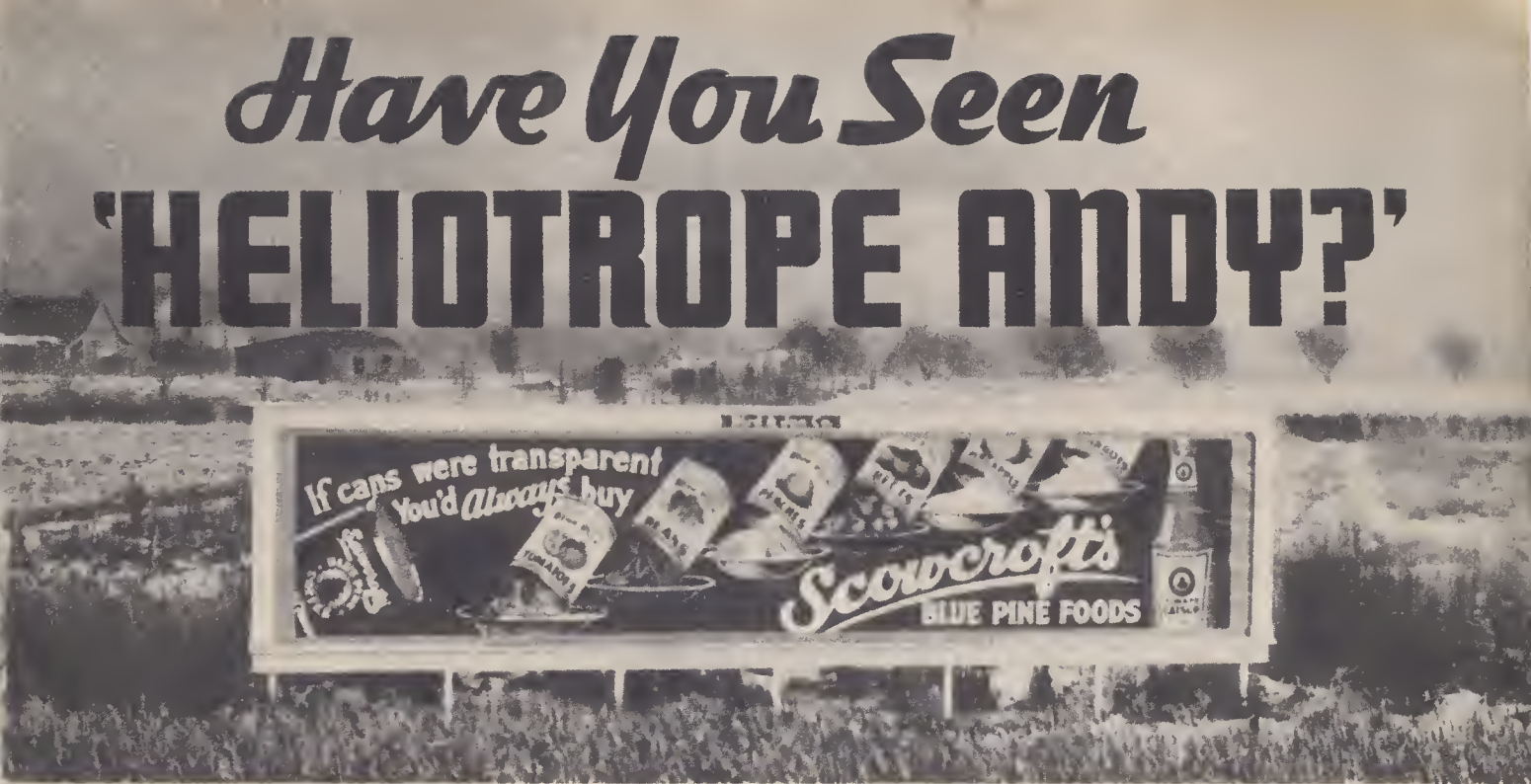
Louis Philpott was eighteen years old and looking for scrap tin when he found her. It was the morning of May 19, 1928, a clear bright Saturday in Ogden, Utah. The weeds near the signboard on Wall Avenue were showing the green of late spring. Louis cut through the vacant lot behind the Brigham Hotel without much thought, looking for useful junk in the brush. He saw something in the bushes and stopped. He walked closer and touched it, and then he went to find the police.” I thought at first it was a store dummy,” he told the inquest, “and then I touched it and went for the police.”1Ogden Standard-Examiner, May 22, 1928, evening edition
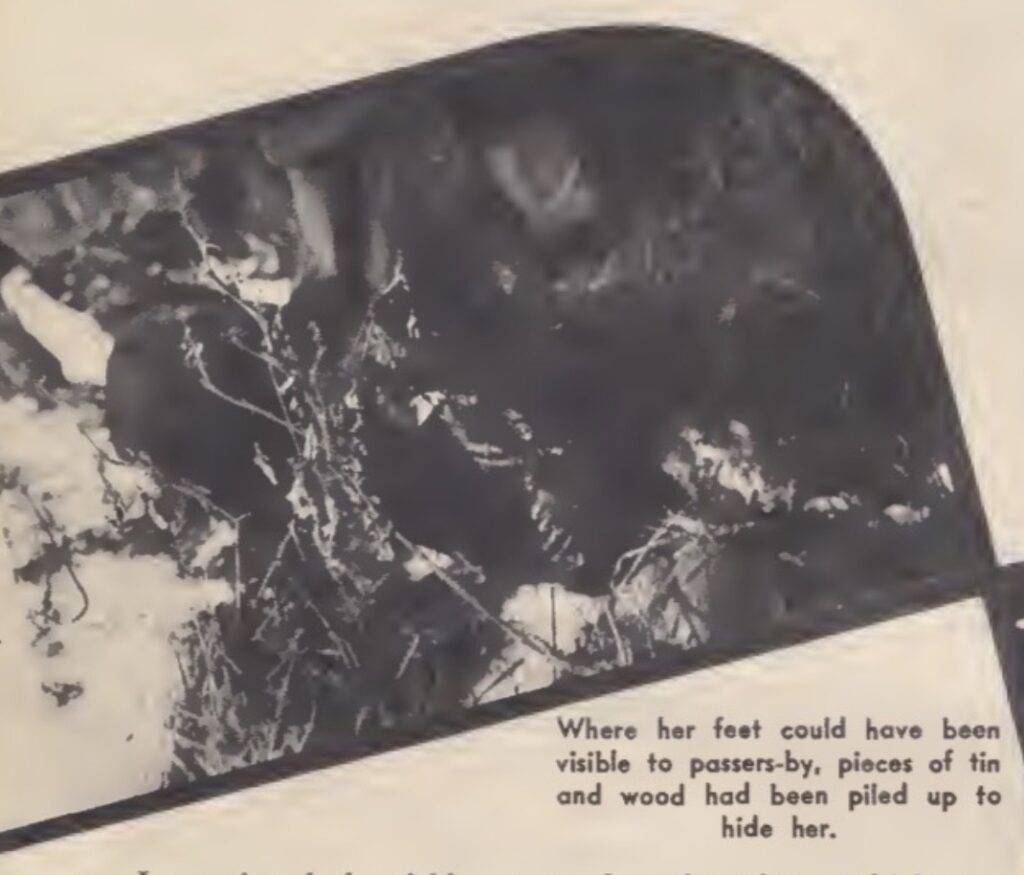
The woman in the bushes was lying face down, her blonde hair matted with congealed blood. Rouge on her lips was the only color left in her face. Her false teeth were on the ground beside her. A piece of tin had been propped over her head, and wood and debris piled around her feet, where they might have been visible to anyone passing on Wall Avenue. She had a sack of old clothes with her and a gold wedding ring on her finger. No money, no other valuables.
The police would eventually determine she was Anna Eddy Haworth, a sixty-seven year old divorced woman who had lived in Ogden for fifty years and had been dead for ten to twelve hours when Louis Philpott found her. The police also had a theory about how she died: she had drunk herself to death.2Ogden Standard-Examiner, May 19, 1928
Anna Louise Martin was born in 1860 in Croton, Iowa, the daughter of an Irish immigrant father and an Iowa-born mother. She came to Ogden as a young woman, married, raised three sons to adulthood, buried one husband and divorced another. By 1928 she was living on Wilson Lane with a neighbor named Roy Price, a roommate named Marie Louise Malone, and a man named John Kelley who she considered a friend.3Utah State Death Certificate, 1910 Federal Census She was also known to drink canned heat.
Canned heat was Sterno or something like it, fuel alcohol squeezed through a cloth to extract the methanol inside and drunk when legal liquor was unavailable or unaffordable or both. It killed people. It blinded people. The people who drank it were called squeeze fiends, and in Prohibition-era Ogden there was no shortage of them. Ogden’s 25th Street was one of the most wide open vice districts in the American West, a railroad junction where bootleg liquor, gambling, and prostitution operated with the open cooperation of a police department that had been bought and paid for by the money that kept the whole apparatus running. Reform efforts came and went. The cleanup would not come until the late 1940s.
John W. Kelley was not new to Ogden when Anna’s body was found behind the Brigham Hotel. City directories place him there as early as 1923, listed as a switchman for the Ogden Union Railway and Depot Company, living at 255 27th Street, two blocks from 25th Street’s back doors and side entrances. By 1924 he had moved to 362 24th Street and his occupation had dropped to laborer, either between railroad jobs or picking up casual work around the yards. After 1924 he disappears from the Ogden directories for four years, surfacing again in the 1928 directory as a brakeman at 277 27th Street, back on the same street he had lived on five years earlier. He had been back in the city for about a month and a half when Anna was killed, according to inquest testimony, but the directory suggests his return may have been earlier than witnesses realized. He knew the neighborhood because he had been living in it, off and on, for years.4Ogden City Directories, 1923, 1924, 1928 (Ancestry)
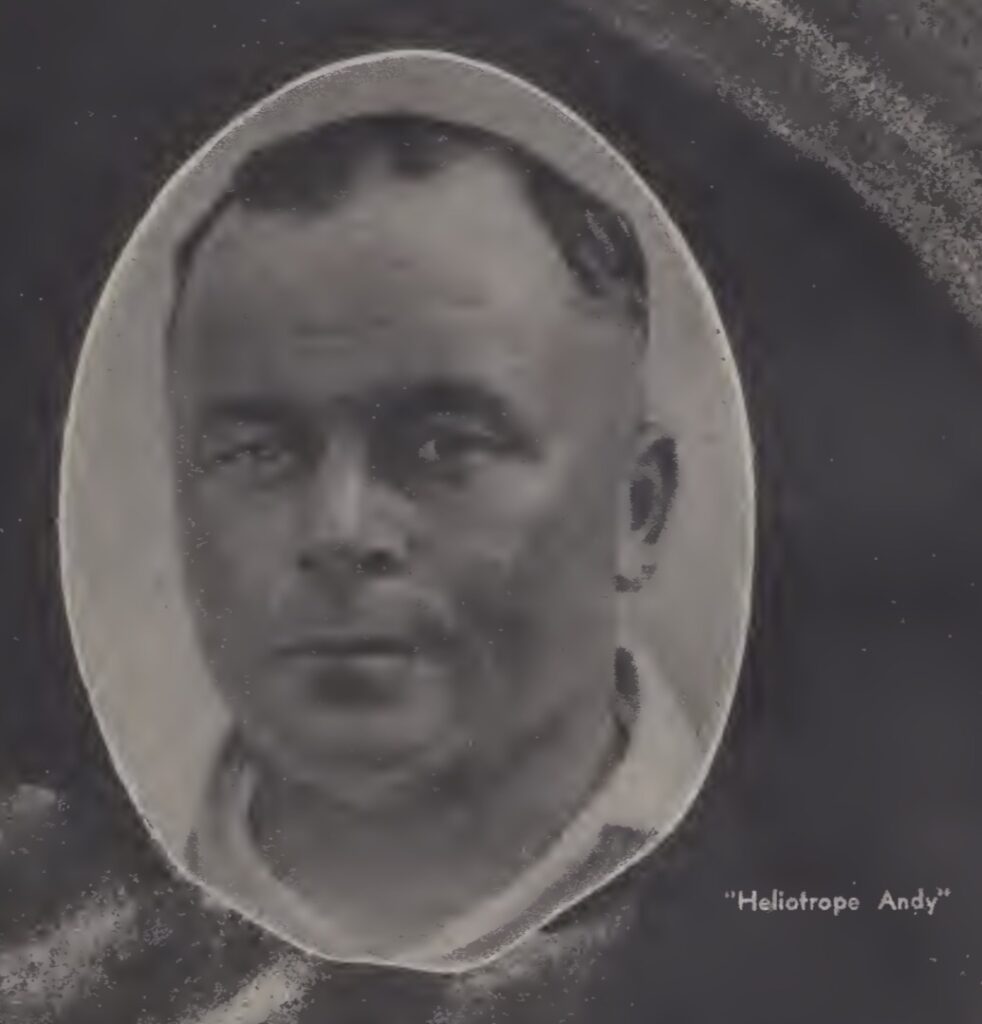
He was said to be thirty-four years old, five feet five, over two hundred pounds, with a light complexion and a large red flat face. He worked irregular hours off a call board, which meant he came and went from the rail yards without a fixed schedule and without much accounting for his time.5Ogden Standard-Examiner, May 23, 1928 Ogden’s 25th Street vice district ran on railroad money and railroad men, and it was also well documented as a node for criminal networks operating out of California and Kansas City during the same period. A man who had been living and working in that neighborhood since 1923 would have known those networks the way he knew the call board schedule.
He also had a habit that everyone who encountered him remembered. Kelley used heliotrope perfume, a heavy sweet scented cologne sold alongside hair tonic and bay rum, and he used it in quantities nobody could explain.6Warner, American Detective, August 1936 It was on his bed, his clothes, his shoes. He was in at the Ogden Drug Company twice a week to buy more, always in person, always enough that the pharmacist had wondered if he should be set up with a commercial account given how much he went through. The staff had taken to calling him Heliotrope Andy. Heliotrope was eau de toilette, a cheap scented water that ran roughly 70 to 80 percent alcohol by volume, higher than most whisky, and in Prohibition-era Ogden that was not an irrelevant fact. Whether Kelley was wearing it, drinking it, or both is a question the record raises and doesn’t fully answer, but the people who knew him best said the rooms he left behind fairly reeked of the stuff and had to be fumigated.
James Warner was a police reporter for the Ogden Standard-Examiner and he was at the scene on the morning of May 19th when Louis Philpott’s discovery became a police matter.7American Detective, August 1936 Warner had worked his way through school as a druggist’s clerk and knew perfume the way most people don’t. Standing over Anna’s body behind the signboard he noticed two distinct scents. One was narcissus, familiar and relatively expensive, which he traced to Anna’s handbag. The other was something heavier, coming from around the body itself, sweet and persistent in the mild damp air. Warner, writing about it eight years later for American Detective magazine, described it as “evasive and alluring, the scent of a distinctive perfume,” which tells you everything you need to know about James Warner.
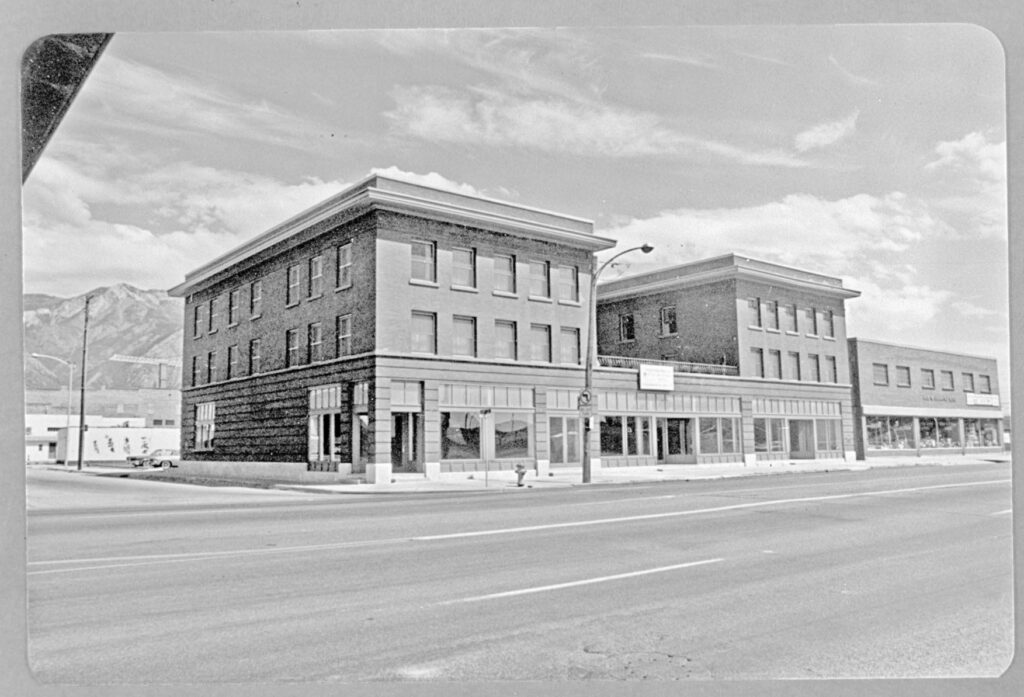
Sergeant L.M. Hilton of the homicide detail arrived and found, amid the debris near the body, a jagged fragment of a perfume bottle. Clean, no label, recently broken. The heavy odor came from it. Hilton held the reeking glass between two fingers and asked Warner if the smell was distinctive enough to identify. Warner thought it was. He spent the next several days touring every drug store in Ogden, bottle by bottle, until he found it. Heliotrope. When Sergeant L.W. Pack later searched Kelley’s room at 2665 Wall Avenue he found multiple empty heliotrope bottles and one partially filled. The room smelled strongly of it. So had Anna’s body.
Anna had been with Kelley the night she died. Three witnesses placed them together between 8:30 and 9:30 on Friday evening, within a block of where her body was found. Jim Papageorge, proprietor of the Traveler’s Cafe on 25th Street, went to the back of his establishment around nine o’clock when his dog barked and saw a small woman matching Anna’s description with a man behind her. He feared a holdup and told them to go away. Angelo Papageorge, an employee at a club next door, heard knocking at the back door around the same time, opened it, and found Kelley standing there, half drunk, over two hundred pounds, asking for whisky. Angelo said he didn’t have any and shut the door. He went out a few minutes later, curious, as he told the inquest, to see “what kind of a girl Kelley had.” He saw Anna. Kelley took her by the arm and they moved away.8Ogden Standard-Examiner, May 23, 1928
Roy Price, who lived next door to Anna on Wilson Lane, had seen her Friday night at 8:30 with a heavy set man. Her son George testified at the inquest that his mother had spoken to him numerous times about a man named Kelley, a brakeman for the Southern Pacific, and had asked George if he knew him since they both worked for the same railroad. She wanted to introduce them. She called Kelley a friend. George never met him.9Ogden Standard-Examiner, May 23, 1928 Anna’s roommate Marie Louise Malone had met him, briefly, without knowing what she was looking at. Kelley had driven the two women home one evening and stopped at the apartment to get something, leaving Malone waiting in the car.10American Detective, August 1936 That was where she had smelled the perfume. When Warner showed her the fragment of the bottle from the scene at the coroner’s office she recognized the scent but couldn’t place it, only felt that she had encountered it somewhere before. When it came back to her, it came with tears.
The coroner’s jury convened on Tuesday, May 22nd, in the courtroom of Judge John A. Hendricks, who was serving as acting coroner. They had viewed Anna’s body on Monday morning and heard testimony Tuesday. Their verdict: Mrs. Annie Eddy Haworth came to her death from the effects of a blow upon the left temple administered by means unknown to the jury, and that the body was placed in a clump of bushes by some person or persons unknown.11Ogden Standard-Examiner, May 22, 1928 The problem was that Anna had already been buried without a post-mortem examination, despite visible bruising on her temple and circumstances suspicious enough to warrant an inquest. The body was exhumed on May 23rd and Dr. N.H. Savage, the city physician, performed the examination that should have happened before she went into the ground. What he found changed the nature of the case. There was a long bruise over her left temple, and when the scalp was pulled back, two pools of blood had collected beneath it on both sides of her head. The bone on the right side of her skull, above the ear, was fractured, and blood had gathered between the skull and the brain. The fracture, Savage noted, could possibly have been caused by a fall, but could not have resulted from a fist blow, no matter how severe.12Ogden Standard-Examiner, May 25, 1928
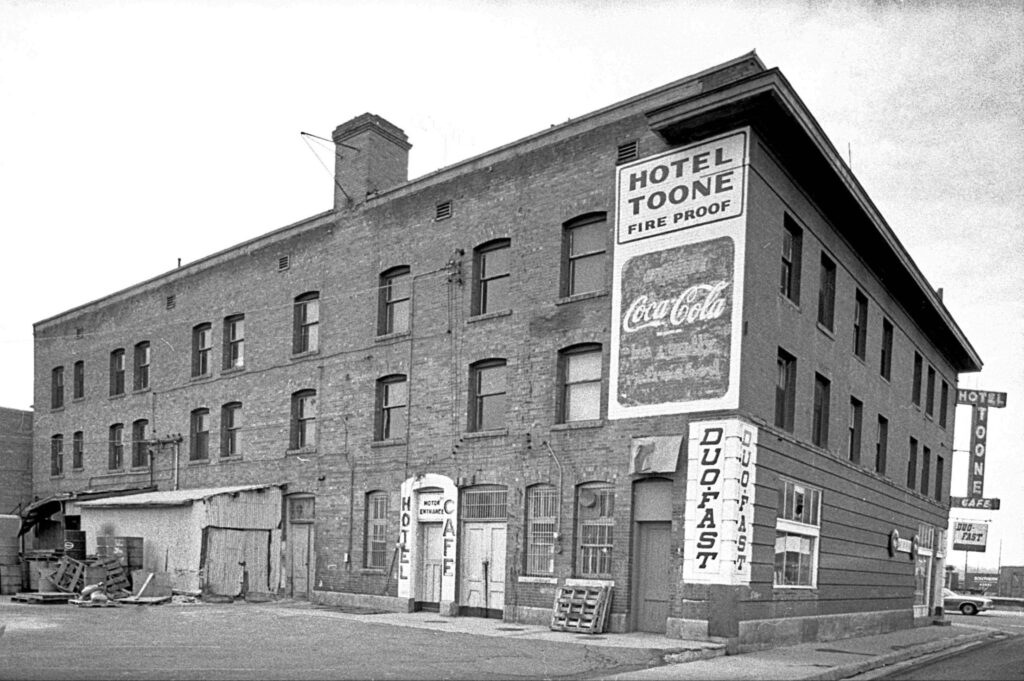
Detective George Theobald had already found the likely weapon at the scene and wrapped in his handkerchief: a rusted ten-inch length of steel, part of a tire spring, propped against the foot of the signboard. There was blood and hair on one end. No fingerprints.
By the time the post-mortem results came back, John Kelley was gone. He had left his room at 6:45 on Saturday morning, three hours before Louis Philpott found Anna’s body. Brakemen worked off a call board, a ranked list of who was next up for a run, and Kelley had telephoned that morning to find out his position. He was third out, meaning two men ahead of him had to be called before his turn came. He told his landlady he could be found around the railroad yards and walked out the door. The call boy came. Several of Kelley’s friends came. He did not return. He left behind his brakeman’s badge, his switch keys, his railroad rule book, everything that identified him professionally, and walked out with only the clothes on his back. When Sergeant Pack came asking, the landlady told him she had cleaned out Kelley’s rooms and found nothing that would give a hint as to where he had gone, not a line, not a note, just, as she put it, a little curiosity to know where he’d gone or if there was a scratch that might give a hint to who he was.
A warrant had been issued against Kelley for grand larceny, related to the theft of a car on the day of Anna’s murder. Police noted that Kelley was alleged to have had Anna’s daughter out riding in the stolen car, though this detail appeared in only one newspaper account and was never corroborated. No daughter appears anywhere else in the record. Anna had three sons. The grand larceny warrant was, in any case, the only formal legal instrument against Kelley for years. No murder warrant was issued at the time of the killing. The larceny charge was intended to be the mechanism by which Kelley could be brought back to face the more serious accusation, and at some point in the intervening years it was quietly dismissed.
In April 1929, a year after Anna’s death, the Ogden Standard-Examiner ran a retrospective on violent crime in Weber County. It mentioned Anna’s case in a single paragraph. She had been drinking, it was declared, and died from a fall or a blow on the head. The name of a railroad man, the last person seen with her, was mentioned at the inquest, but no attempt to trace him was made, as there was little or no actual evidence to connect him with the crime. Three witnesses had placed Kelley with Anna that night. The post-mortem had confirmed a skull fracture from a blunt instrument. The perfume evidence had been carefully documented. A warrant had existed. Less than a year after her murder, the public record had quietly returned Anna Eddy Haworth to the category she had occupied when Louis Philpott found her: a woman who had been drinking, found dead, cause uncertain.
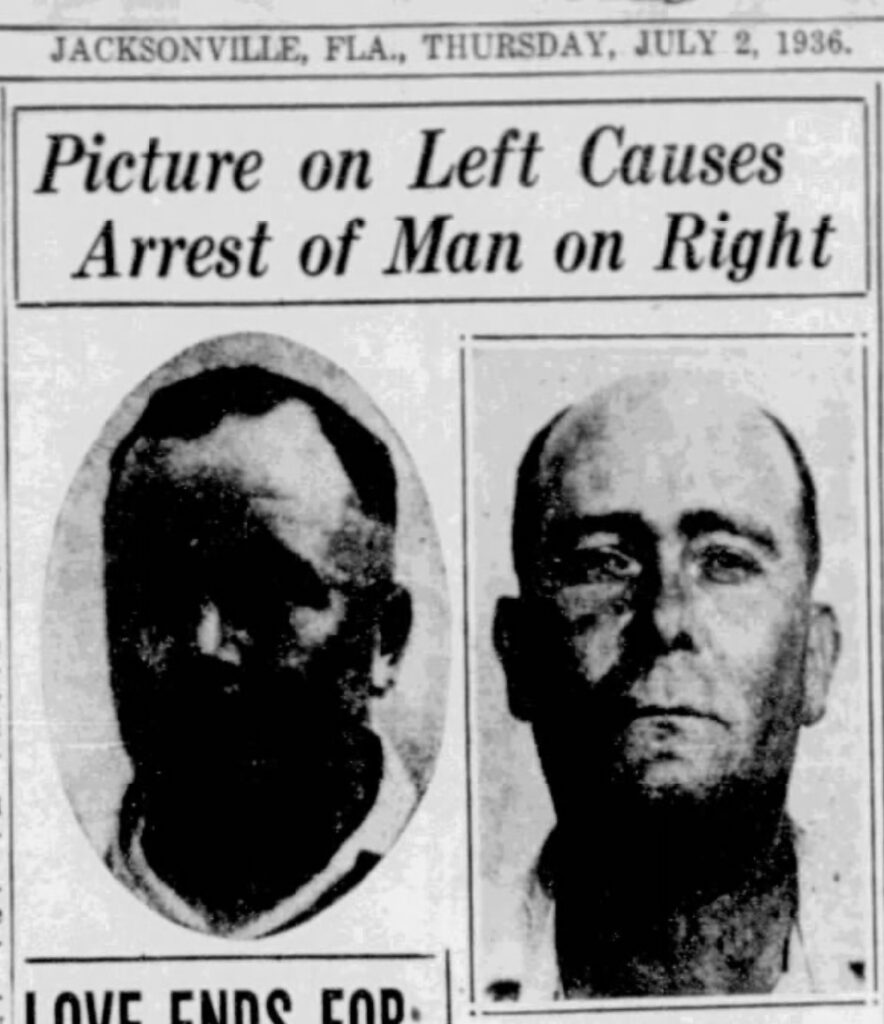
Eight years after Anna’s body was found behind the signboard on Wall Avenue, James Warner wrote up the case for American Detective magazine under the title “Veil of Mystery: Have You Seen Heliotrope Andy?” The piece ran in August 1936 with a photograph of Kelley, and it was that photograph that broke the case open, or came closest to it. A Jacksonville detective named R.N. Plummer read the magazine and recognized a man he had seen on the streets of Jacksonville, a man going by the name C.T. Barber who lived in New Smyrna Beach about sixty miles south. Barber wasn’t wanted for anything as far as Plummer knew, but he resembled the photograph too much not to investigate. He was arrested on June 24, 1936, on a charge of suspicion.
His photograph and fingerprints were sent to Ogden police chief Rial C. Moore and to the Federal Bureau of Investigation in Washington. Moore tentatively identified the picture as that of Kelley but wanted more definitive identification before sending for him. The FBI reported that Barber had served three months in Wichita, Kansas for a minor crime and was also wanted in New Smyrna on a theft charge. Barber admitted having worked on the railroad and having been in Ogden at some point. He denied any knowledge of the murder. “All a chain of coincidences,” he said. The Ogden police department was, by one account, evenly divided on whether he was their man.13Ogden Standard-Examiner, July 1, 1936
Back in New Smyrna, Barber’s brother-in-law, a man named Arnette, notified the New Smyrna police chief immediately upon reading about the Jacksonville arrest in the Sunday paper. He told the chief that Barber had stolen bonus bonds from him and that he had not known where Barber was until he read about the arrest. With the exception of a bald head, the Jacksonville Journal noted, Barber resembled the photograph closely, the photograph having been taken approximately ten years earlier when Kelley still had a full head of hair. Barber did not object to being fingerprinted. He denied emphatically any participation in the murder of Anna Haworth.
Barber was not an identity Kelley had invented in a hurry. By 1934 he had been established long enough in Volusia County to have local disputes on record. A man named J.H. Chivers filed an assault complaint against him that June, and Barber was convicted in July, fined twenty-five dollars and costs or ninety days.14 Daytona Beach News-Journal, July 11, 1934 Chivers is worth knowing about. In April 1929, less than a year after Anna’s murder, Chivers had been arrested in Miami as part of what federal authorities described as the largest narcotics ring ever to exist in the South, a morphine distribution network operating between Miami and New York that had been backed by money from Arnold Rothstein, the New York gambler and organized crime financier murdered the previous year.15Miami News, April 6 and 8, 1929 Chivers was held on conspiracy charges and described by the arresting narcotic agent as someone for whom there was enough evidence for a conviction. At his hearing Chivers admitted to a prior federal arrest in Texas, the details of which he refused to explain. That Texas arrest was a 1921 car theft charge out of Fort Worth for which he had been caught in San Antonio.16Fort Worth Star-Telegram, July 19, 1921 Before that, in 1917, a J.H. Chivers had been arrested at a social club raid in Myndus, New Mexico, a small settlement on the Southern Pacific line between El Paso and Tucson, and charged with gaming.17El Paso Times, December 3, 1917 Myndus sat on the Southern Pacific line, the railroad Kelley worked and the geography he moved through before landing in Ogden in 1923.
Whether Kelley and Chivers knew each other before Florida is not something the record establishes. What it does establish is that the man who killed Anna Eddy Haworth and fled Ogden ended up, within a few years, in the same small Florida county as a man with documented connections to a Rothstein-linked narcotics network, and that their relationship was violent enough to produce an assault conviction. The world Kelley had been operating in on 25th Street in Ogden, where California and Kansas City criminal networks ran alongside the railroad money, was not a different world from the one he found in Florida.
On July 1, 1936, Detective L.W. Pack announced that a complaint and warrant charging John W. Kelley with the slaying of Mrs. Annie Eddy Haworth had been issued. It was the first murder warrant in the eight years since Anna died, issued for the purpose of possible extradition. The reason no murder warrant had existed before, it emerged, was that the grand larceny warrant had been considered sufficient for extradition purposes. When that warrant was dismissed sometime in the intervening years, nothing replaced it. The murder charge had been sitting in an incomplete file, waiting for something to turn up. On the same day the warrant was issued, local officers expressed doubt as to whether steps would be taken to extradite Kelley even if the man in Florida proved to be him.
The same page of the Ogden Standard-Examiner that carried the July 5, 1936 update on the Kelley case ran another story. A man named Mortensen had beaten his in-laws to death with a thirty-inch pickaxe handle, badly beaten his own wife, and left her eighty-two year old grandmother near death.18Ogden Standard-Examiner, July 5, 1936 Four victims, three fatal. Mortensen had fled to Los Angeles, where he confessed when caught and waived extradition. Ogden sent two detectives to bring him back. For the man who beat a sixty-seven year old woman to death behind a signboard and covered her with tin so she wouldn’t be found, the city that had known her for fifty years could not decide whether the trip to Florida was worth making.
Mortensen had killed people who mattered in the way Ogden understood mattering. Anna Eddy Haworth had drunk canned heat and spent time with railroad men on 25th Street. The hierarchy was not subtle, and it was not operating in a vacuum. Ogden in 1936 was a city whose police department had spent decades on the payroll of the vice operators who ran 25th Street. The money that kept the brothels and gambling dens and bootleg liquor operations running flowed upward through the department and into city government. In 1936, asking Ogden’s police department to extend itself on behalf of a squeeze fiend was asking an institution to care about someone it had been structurally organized not to care about.
There is no record of extradition proceedings. There is no trial, and no conviction. John W. Kelley, also known as C.E. Barber, also known as C.T. Barber, also known as William Kelley, brakeman for the Southern Pacific Railroad, habitual user of heliotrope perfume, walked out of a Jacksonville jail cell and back into the life he had built in New Smyrna Beach, Florida, under a name that was not his. He had four cents in his pockets when they arrested him.19Jacksonville Journal, July 2, 1936 By 1940 he had a wife and a newborn daughter named Marietta, living at 724 East Indiana Avenue in New Smyrna Beach.20Daytona Beach News-Journal, November 17, 1940 After that the record goes quiet in the way it had always gone quiet around this man, deliberately and completely. His real name, if John Kelley was not it, went with him.
Anna Louise Martin Eddy Haworth is buried in Ogden City Cemetery. So is Durastus Haworth, the man she married and divorced in the years between her first husband’s death and her own. She was at Lindquist and Sons undertaking parlors the Thursday before she was killed, viewing the body of a friend. Twenty-four hours later she was back, this time as the body being viewed.
Her son William identified her remains. Her son George testified at the inquest about the man she had wanted him to meet, the friend named Kelley she had talked about on numerous occasions, the man she had wanted to introduce because they both worked for the same railroad and she thought that mattered. The man who killed her smelled like flowers. A woman who had lived in the same city for fifty years, who had buried a husband and divorced another, who had raised three sons to adulthood, who wore a gold wedding ring and kept rouge on her lips and carried narcissus in her handbag, ended up under a piece of tin in a vacant lot because an eighteen year old boy was looking for scrap metal and a newspaper reporter knew what heliotrope smelled like.