header parallax image
The Dead History
  • Forums
  • Behind the Veil
  • Haunt My Inbox
  • Haunted Travels
  • The Forgotten Vault
  • Guides from the Other Side
  • Forums
  • Behind the Veil
  • Haunt My Inbox
  • Haunted Travels
  • The Forgotten Vault
  • Guides from the Other Side
True Crime

James Ruppert: The Easter Sunday Massacre

March 30, 2025 April 30, 2025
Strange & Unusual

Mary Reeser: Spontaneous Combustion Case

August 13, 2020 April 30, 2025
History

A History of Séances

February 27, 2025 March 7, 2025
Haunted History

Death Did Not Silence Her: The Murder of Zona Heaster Shue

April 22, 2025 April 30, 2025
HistoryPosthumous ProfilesStrange & UnusualUrban Legends

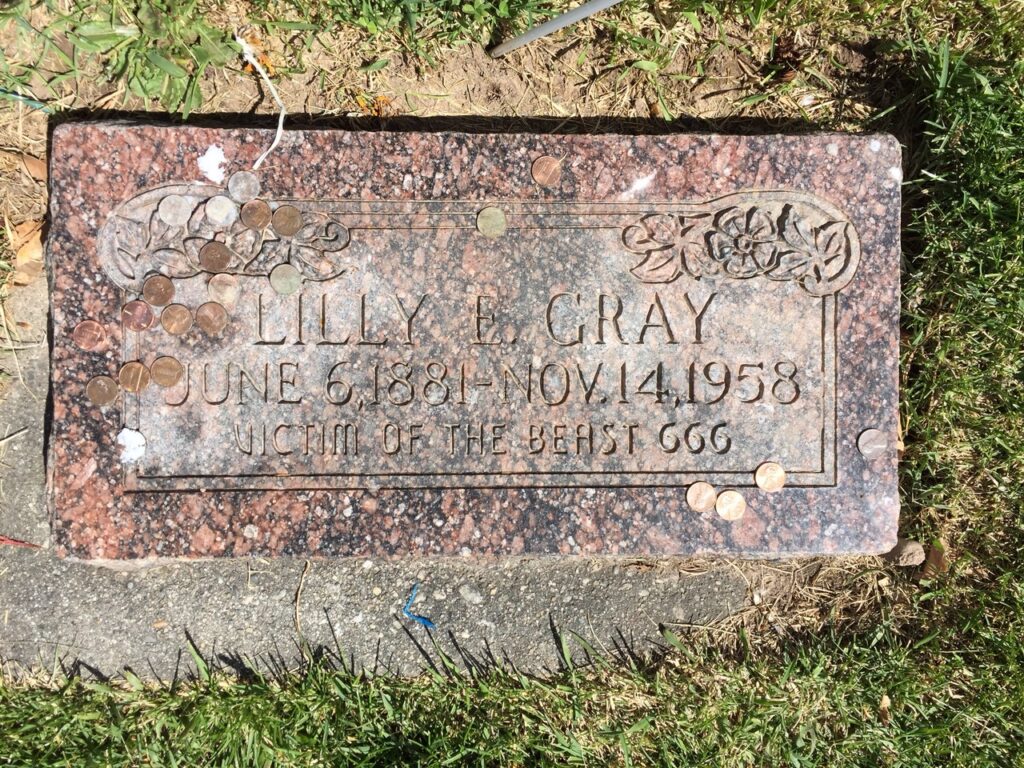
Unraveling the Legend: Lilly E. Gray Victim of the Beast 666

October 29, 2018 February 1, 2025
CemeteriesUrban Legends

Flo’s Grave: The Haunted Legend & Tragic Truth

October 13, 2012 February 13, 2025
CemeteriesUrban Legends

The Vampire of Gibson Cemetery: Fact, Fear, and Folklore

March 11, 2018 March 4, 2025 Jennifer Jones4 comments

What do World War I, anti-immigrant hysteria, and a vampire have in common? As strange as it sounds, they all converge in a forgotten cemetery in Park Hills, Missouri. This is where the legend of the Vampire of Gibson Cemetery comes to life.

Tucked away beneath layers of dead leaves and tangled brush, Gibson Cemetery barely looks like a cemetery anymore. Time and neglect have broken or scattered most of the headstones, wearing away the names.If you didn’t know better, you might not even realize you were standing among the dead.

And yet, there’s a story buried here—one that involves an accused vampire, an iron-barred grave, and a town gripped by fear.

A Cemetery Lost to Time

Gibson Cemetery dates back to the 1820s when the Gibson family first settled in the area. Originally a family burial ground, it eventually expanded to include others from nearby mining towns like Flat River, Rivermines, and Elvins. No one has determined the exact number of people buried here, but most graves date back to the early 1900s, when this part of Missouri became known as the Lead Belt.

Mining was the lifeblood of these small towns, and the industry drew a flood of immigrant workers, many from Hungary. These men took on the most grueling and dangerous jobs, often working as shovelers deep in the mines. Locals derogatorily called them “hunkies” and paid them a measly thirty cents an hour for backbreaking labor.

The Lead Belt community hardly welcomed their presence.

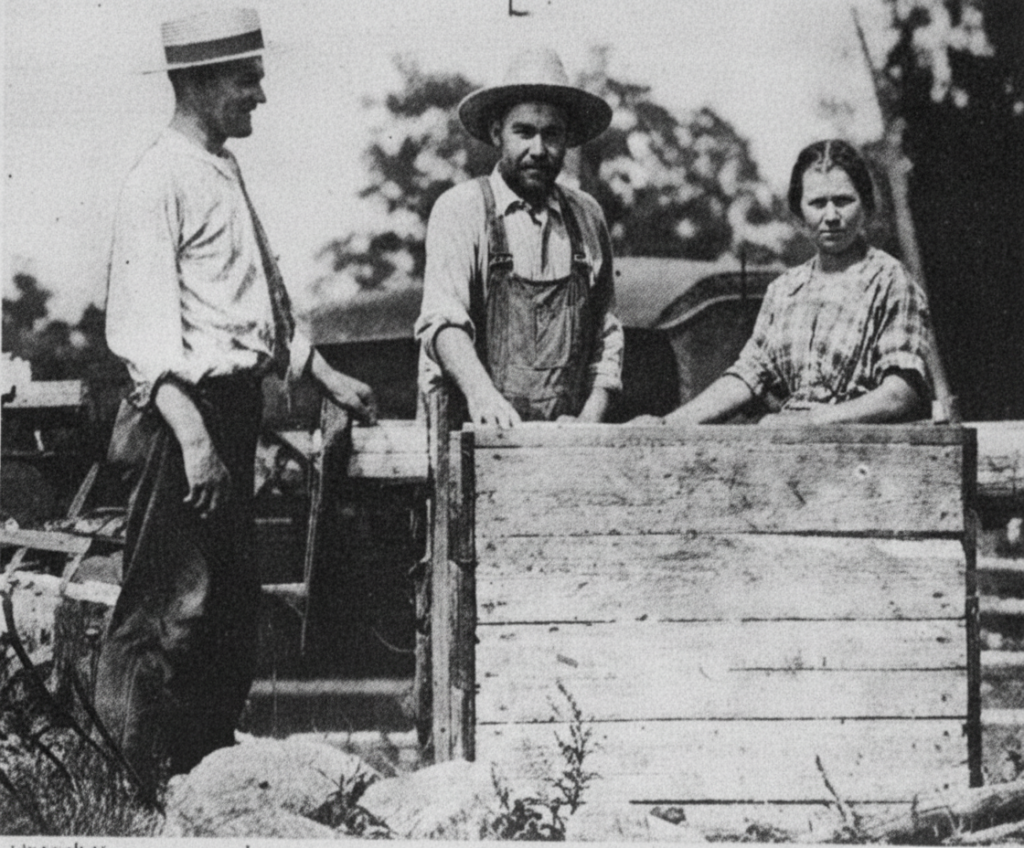
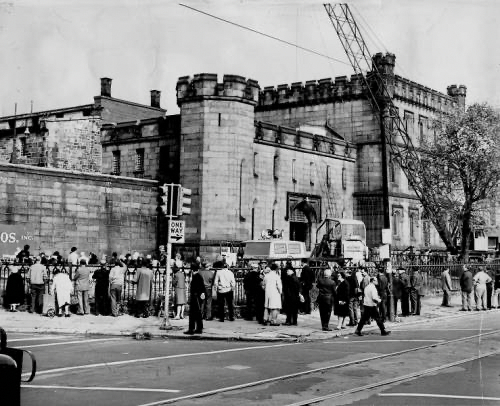
Pictures above Courtesy of The State Historical Society of Missouri

The Lead Belt Riot of 1917: Fear Turns to Violence

By 1917, tensions between immigrant miners and local laborers had reached a boiling point. World War I fueled a wave of xenophobia, and many viewed Hungarian miners as foreign threats, making them easy scapegoats.

Then came the riot.

On July 14, 1917, a mob of American miners, waving American flags, stormed the homes and boarding houses of Hungarian workers. They looted, beat, and chased them out of town.1Macon Chronicle-Herald – Fri, Jul 20, 1917 | Pg 1 Newspapers at the time described the event bluntly:

“Flat River Miners Eject Foreigners.”

But not all of those forced to flee were foreigners. Many were naturalized American citizens, legally entitled to live and work in the Lead Belt. In their desperate escape, some left behind everything—homes, businesses, even their wives and children. The violence was so extreme that Hungarian-American organizations called for a congressional investigation, demanding answers from Washington about how such an event could happen on U.S. soil.

Years of Rising Tensions

The 1917 riot wasn’t an isolated event—it was the violent climax of years of tension. As early as 1913, company officials and anti-union groups targeted Hungarian, Bohemian, and Italian miners for their union activities. The situation turned deadly when mining company guards opened fire on striking workers, injuring two and escalating the conflict into a near-militarized standoff.

In response, 500 miners blockaded the mines, stopping and searching vehicles to prevent strikebreakers from getting through. What happened in the Lead Belt was part of a broader pattern of anti-immigrant violence across the country, but it left a lasting mark on the people—and the folklore—of Missouri. By 1917, these tensions had already boiled over once before. Just four years earlier, the Lead Belt saw gunfire, barricades, and a full-scale labor war.

The same fears that fueled those clashes—fears of foreign workers taking jobs and gaining power—escalated into violence. Rioters didn’t stop at homes—they dragged Hungarian workers into the streets, beat them, and set fire to their belongings. Rioters looted businesses, destroyed shops, and drove entire families to flee with only what they could carry. By the time it ended, mobs had herded over 700 Hungarian miners onto trains, exiling them from the very town they helped build. As violence spiraled out of control, state officials sent the Missouri State Militia to restore order. Soldiers patrolled the streets of Flat River, but their presence wasn’t just to stop further rioting—it was to ensure that the mass expulsion of Hungarian miners remained permanent.

The Aftermath of Expulsion

By the time the dust settled, many of those forced onto trains would never return. Some, like a Russian immigrant and his family, barely survived the journey. After mobs drove him to St. Louis, he returned to salvage what remained of his home—only to receive a telegram informing him that exposure had killed two of his children.The riot hadn’t just displaced people. It had killed them.

Women didn’t just stand by during these clashes—they fought, too. In one 1913 incident, a female striker nearly attacked a company lawyer with a rock, a visceral reminder that these weren’t just labor disputes; they were full-scale community struggles.

The High Cost of Striking

The strikes weren’t just violent—they were financially devastating. With a large portion of their workforce gone, several mining operations slowed or shut down completely, costing the region over $100,000 a day in lost wages and damages. The Lead Belt depended on its mines, and now, thanks to fear and violence, the industry itself was beginning to collapse.

Some merchants even refused to extend credit to striking miners, effectively starving them out to force them back to work. Desperation, distrust, and fear of outsiders — the perfect storm for a legend to be born.

The Vampire of Elvins

Between 1910 and 1920, an unsettling number of children in the area died. In an era before vaccines and antibiotics, disease took many young lives, and in 1917, a diphtheria outbreak devastated the region. But medical explanations didn’t always satisfy a grieving community looking for someone—or something—to blame.

Soon, a rumor began to spread.

A Hungarian miner living in Elvins was accused of being a vampire. Locals whispered that he lured children to his home… and ate them. Depending on who told the story, the man was also said to be an albino, his skin deathly pale, his hair bone-white, and his eyes red as blood.

When he died, the townspeople refused to let him be buried among their dead—especially not near the children’s graves. Instead, his body was placed at the far edge of Gibson Cemetery, enclosed by a wrought iron fence lined with crosses. The belief? Even in death, the barrier would keep him from rising from the grave.

Unlike many urban legends, this one had a physical marker. The wrought iron fence was real. The crosses, placed to prevent his return, were real. And according to local records, his grave was surrounded by the small headstones of children—further fueling the belief that he had preyed upon them in life.

And from there, the legend of the Vampire of Gibson Cemetery was born.

Folklore, Fear, and the Power of Stories

Was there really a vampire buried in Gibson Cemetery? Of course not. The accused man was just another immigrant caught in the crossfire of prejudice and paranoia.

And the dead children? They died of disease, not supernatural horror.

But history has a way of shaping legends. In 1917—the same year the Lead Belt Riot erupted—the Washington Times ran a full serialization of Bram Stoker’s Dracula. In a town already primed with anti-immigrant fears and real-life violence, it’s not hard to imagine how the folklore took hold.

A foreigner. A pale-skinned outsider. A town full of frightened people looking for someone to blame.

A vampire was the perfect monster.

Gibson Cemetery Today

Today, Gibson Cemetery has been swallowed by time, its iron fences rusted and its gravestones shattered. No one knows exactly where the so-called vampire was buried, but it is rumored he was buried within the cast iron fence. Maybe he’s still out there, hidden beneath the overgrowth, his grave forgotten.

Or maybe he was never there at all—just a name lost to history, twisted into a monster by fear.

Either way, the legend remains. And in a place like this, some stories never stay buried.

continue reading
Haunted AmericaHistory

Ghosts of The White House – Willie Lincoln

November 30, 2017 February 13, 2025 Jennifer Jones3 comments

One of the first ghost stories I ever read was about Abraham Lincoln's spirit knocking on a White House

continue reading
Haunted AmericaUrban Legends

Thanksgiving Ghost of Marsh Bridge

November 23, 2017 February 27, 2025 Jennifer Jones

On Thanksgiving Day, 1902, a southbound train neared Geneva, NY, approaching the Marsh Bridge. As it did, the engineer

continue reading
Forgotten History

United Airlines Flight 227 Crash: The Disaster at SLC

November 11, 2017 March 3, 2025 Jennifer Jones7 comments

It’s fascinating (and sometimes heartbreaking) how time buries certain tragic events. Occasionally, I stumble across them while digging through

continue reading
Cemeteries

The Dead History’s Top 5 Favorite Cemeteries

October 21, 2017 February 26, 2025 Jennifer Jones8 comments

If you’ve ever felt drawn to the quiet beauty of a cemetery, you’re not alone. There’s even a term

continue reading
Haunted America

Lost to the Fire – Ghosts of The Calumet Hotel

October 7, 2017 February 25, 2025 Jennifer Jones6 comments

Some places refuse to die. Pipestone, Minnesota’s Calumet Hotel is one of them. Built in 1888 from the town’s

continue reading
Haunted America

Hotel San Carlos – Where Some Have Never Checked Out

August 21, 2017 February 25, 2025 Jennifer Jones2 comments

On a recent trip to my hometown of Phoenix, Arizona, Matt and I stayed in of the state’s most

continue reading
Cemeteries

Suicide Park Cemetery – Deaths At a Tie Hack Camp

June 4, 2017 February 24, 2025 Jennifer Jones

Just a few feet from the Utah-Wyoming border, on the North Slope of the Uinta Mountains, lies Suicide Park.

continue reading
CemeteriesHaunted America

Mouth Cemetery Hauntings: Ghostly Legends & Lore

May 30, 2017 February 24, 2025 Jennifer Jones4 comments

I received a request to research Mouth Cemetery, and I’m not going to lie, I got a little excited

continue reading
CemeteriesHistory

What happened to the Poor Farm Cemetery?

March 6, 2017 February 23, 2025 Jennifer Jones15 comments

While researching local haunted places to write about, I kept finding references to people being buried in the Poor

continue reading
1 … 4 5 6 7 8
Page 6 of 8

about me

The Dead History

welcome to the dead history

breakline
I'm Jen. I write about ghosts, graves, and the weird stuff history forgot to bury. Welcome to the séance.

Latest Stories

The Strange Report: Week of December 17, 2025

December 16, 2025 December 16, 2025

The Strange Report: Week of December 10, 2025

December 10, 2025 December 10, 2025

The Paines Hollow Ghost

December 9, 2025 December 9, 2025

Elmer McCurdy – Dead Man on Display

October 8, 2025 October 8, 2025

Categories

  • Abandoned5
  • Cemeteries20
  • Dark History2
  • Forgotten History5
  • Guest Posts1
  • Haunted America29
  • Haunted History3
  • Haunted Mansions1
  • Haunted Utah3
  • History9
  • Paranormal Exploration2
  • Posthumous Profiles4
  • Strange & Unusual6
  • True Crime3
  • Urban Legends11
  • Weird News2
Copyright © 2012 - 2025 The Dead History All Rights Reserved.